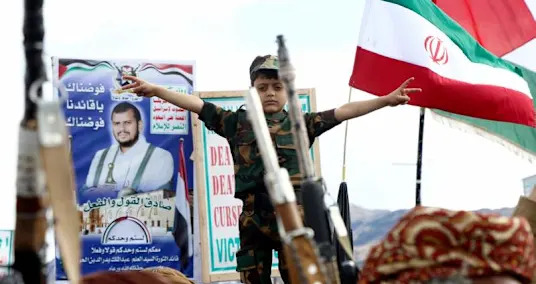
The Houthis successfully hid missiles in caves for years, and the US, Israel, Saudi Arabia, and others were not able to stop the missile and drone attacks or dislodge the group.
When the US and Israel began attacks on Iran on February 28, the Iranians had many choices on how to respond. They began to target Israel and the Gulf states with missiles and drones. Three days after the attack, they also encouraged Hezbollah to strike Israel. In addition, they operationalized Iranian-backed militias in Iraq to carry out attacks.
The Iranian response has been complex. Thousands of drones and missiles have targeted the Gulf countries. In total, Iran has targeted a dozen countries and closed the Straits of Hormuz. The majority of Iranian attacks have struck the Gulf, primarily the UAE.
In addition, the Iranian-backed militias in Iraq have carried out around 500 attacks on targets in Iraq. These include the US Embassy in Baghdad, the US consulate in Erbil, Kurdish forces and groups in the Kurdistan Region, and the UAE consulate in Erbil.
With the war spreading to Iraq and Lebanon, and Iran feeling it holds the cards in Hormuz, Tehran waited to encourage the Houthis to move to the offensive. Iran has been seeing signs that the US wants the war to end. It also knows the US is moving forces to the region to potentially invade Iranian islands.
While the US says it has passed notes to Iran via Pakistan to secure a possible ceasefire, Iran does not trust the US. It believes that the US misled Iran about previous rounds of talks, using them to gather US air power in the region to carry out attacks. Iran believes the US purposely tricked Tehran and lied to it during negotiations, and that the US always had plans to carry out a surprise attack.

In Iran’s view, it is the victim, but it also seeks to demonstrate its power in the region. Having kept the Straits of Hormuz closed, it knows pressure is building to reopen the waterway. The Houthis's joining the conflict a month after it began will show that Iran can spread the conflict to the Red Sea, potentially. This will create more complexity for the US and US air power in the region.
The US and Israel have not been able to stop the Houthis in the past. In fact, the US conducted airstrikes in March 2025 but eventually concluded they offered diminishing returns. As such, Iran believes the US and Israel will have trouble dealing with the Houthis.
Iran's 'ring of fire' strategy
Iran and the Houthis believe that creating a “ring of fire” in the region that stretches from Lebanon via Iraq and the Gulf to Yemen, several thousand miles of frontline, will enflame the region and show the US that this war was a mistake.
They want to show that the attack on Iran, carried out as talks were underway, will not end easily for the US. Iran wants to show that it will not only absorb blows but also strategically expand the conflict.
The Houthis represent a broader strategy for Iran, potentially affecting a new global shipping lane via the Red Sea. With the world already on edge about the Hormuz closure, this new front could spook the global economy.
Iran knows, and the Houthis know, that they don’t have to do much to threaten the Red Sea; all they have to do is make it seem that there is a threat. While Israel has also had a Red Sea strategy, supporting Somaliland, the Iranian answer via the Houthis is a new card that has been put into play.
Saudi Arabia fought the Houthis for more than five years from 2015 to 2020, but saw that this was a difficult war in the mountainous terrain of Yemen. Riyadh and the UAE had a falling out over the Yemen strategy. As such, the Houthis have already outplayed countries in the region.
Iran knows this and believes that, like the Houthis, Iran can succeed despite setbacks. The Houthis successfully hid missiles in caves for years, and the US, Israel, Saudi Arabia, and others were not able to stop the missile and drone attacks or dislodge the group.
LATEST POSTS
- 1
 This Huge Ocean Beast Shifts Sharks’ Evolutionary Timeline
 - 2MEPs urge Commission leaders to stop Russia from returning to the Venice Biennale
- 3'The Beast in Me' arrives on Netflix: Is it based on a true story? And what drew Claire Danes to it? What to know about the thriller series.
- 4Watching ‘Home Alone’ with the kids this holiday season? Brace yourself for '6-7.'
- 5‘RichTok’ Influencer Becca Bloom Shows Off Custom Invitations and ‘Most Valued Possession’ from Her Viral 2025 Wedding




- Artemis II astronauts make long-distance call to the space station as they head home from the moon
- Choosing Moving Styles for Your Restroom Redesign
- Doggie diversity in size and shape began at least 11,000 years ago
- French ship crosses Strait of Hormuz in first Western European transit during Iran war
- Is Chinese food truly flavorful?
- From Exemplary to Current: Famous Rings Available
- 21 Things You Ought to Never Tell Your Childless Companion
- Multi-million-euro win in Spanish lottery in doubt due to oversight
- Tehran synagogue damaged by missile strike according to Iranian media