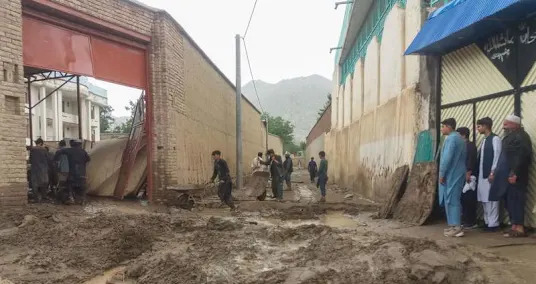
At least 61 people have been killed and 116 injured across Afghanistan since March 26 due to heavy rainfall, floods, landslides and lightning strikes, the Afghan government said on Saturday.
At least four people were still missing after floods affected thousands of families and damaged 2,448 houses, Afghan government spokesman Zabihullah Mujahid said in a post on X.
In addition, thousands of hectares of cropland was also destroyed, posing serious risks to rural communities who rely on agriculture for their livelihoods.
Deadly flooding has struck Afghanistan repeatedly in recent years, causing significant loss of life, injuries and widespread damage to homes, infrastructure and agricultural land.
Extreme weather events such as flash floods and droughts are increasing in Afghanistan, which experts link to the climate crisis.
Despite having a negligible carbon footprint, the country ranks among the most climate-affected nations and remains ill-prepared to cope after decades of conflict, poor infrastructure and a struggling economy, compounded by recent earthquakes and severe flooding.



 Slims down for Maintainable Weight reduction
- Multi-million-euro win in Spanish lottery in doubt due to oversight
- An Extended time of Self-Reflection: Self-awareness through Journaling
- NASA shares first photos of Earth taken by Artemis II
- Flat Earth, spirits and conspiracy theories – experience can shape even extraordinary beliefs
- Iran Used $2 Billion in Crypto to Run Its Militant Proxies in 2025
- Exploring the Difficulties of Co-Nurturing: Individual Bits of knowledge
- The Most Paramount Crossroads in Olympic History
- NASA wants to build a base on the Moon by the 2030s – how and why it plans to build up to a long-term lunar presence