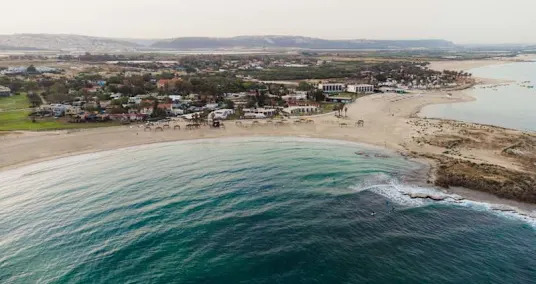
The discovery was made in an ancient shipwreck in the Dor Lagoon near the Carmel Coast, where archaeologists recovered nine pieces of unprocessed iron known as “blooms.”
Researchers from the University of Haifa said Wednesday that an underwater excavation off Israel’s northern Mediterranean coast uncovered what they described as the earliest known cargo of raw iron transported by ship, dating back around 2,600 years, Xinhua reported.
The discovery was made in an ancient shipwreck in the Dor Lagoon near the Carmel Coast, where archaeologists recovered nine pieces of unprocessed iron known as “blooms.” According to the university, the find provides direct evidence of how iron was transported in its earliest commercial stages.
The material was preserved in its original form, having solidified directly in a smelting furnace without undergoing forging or further refinement. Researchers said this distinguishes the cargo from later iron artifacts that typically show signs of shaping or tool-making.
Unlike copper and bronze, which could be melted into liquid form in ancient production processes, iron was heated with charcoal to produce a solid, porous mass. That mass was generally hammered to remove impurities and create denser material suitable for tools and implements.
The recovered blooms showed no indication of that secondary processing stage, suggesting they were transported immediately after production.

Earliest iron shipment discovered in ancient Mediterranean wreck
To determine the age and condition of the cargo, researchers conducted microscopic and chemical analyses.
Radiocarbon dating was also carried out on charred wood embedded in one of the pieces, helping confirm the timeline of the shipment. The findings were published in the journal Heritage Science.
Researchers said the cargo indicates that iron was being moved in raw form from production sites to other locations for further processing, pointing to a level of specialization in ancient manufacturing and trade networks in the Mediterranean.
The University of Haifa said the discovery provides new insight into early iron production and distribution practices in the region.
LATEST POSTS
- 1
 Iran-backed militias reassert power in Iraq, proving the Islamic axis is still standing
 - 2They died 'doing what they loved': The stories of workers in their 80s who died on the job
- 3UK forecast to face weaker growth and higher inflation from Iran war
- 4FDA updates risk classification for voluntary shredded cheese recall
- 537 Things Just Individuals Experiencing childhood during the 80s Will Comprehend





- Really focusing on Succulents: Tips and Procedures
- Undeniably popular Historical centers: Where Craftsmanship and History Meet
- Vote in favor of your Number one Kind of Shades
- What to know about Jack Dorsey's new Vine revival, DiVine
- FDA adds strongest warning to Sarepta gene therapy linked to 2 patient deaths
- UK can legally stop shadow fleet tankers, ministers believe
- Antivirus Programming for Exhaustive Security
- Eight Muslim nations condemn Israel's 'dangerous' new death penalty law
- Volkswagen Plant Could Pivot From Building Cars to Supporting Iron Dome Systems